
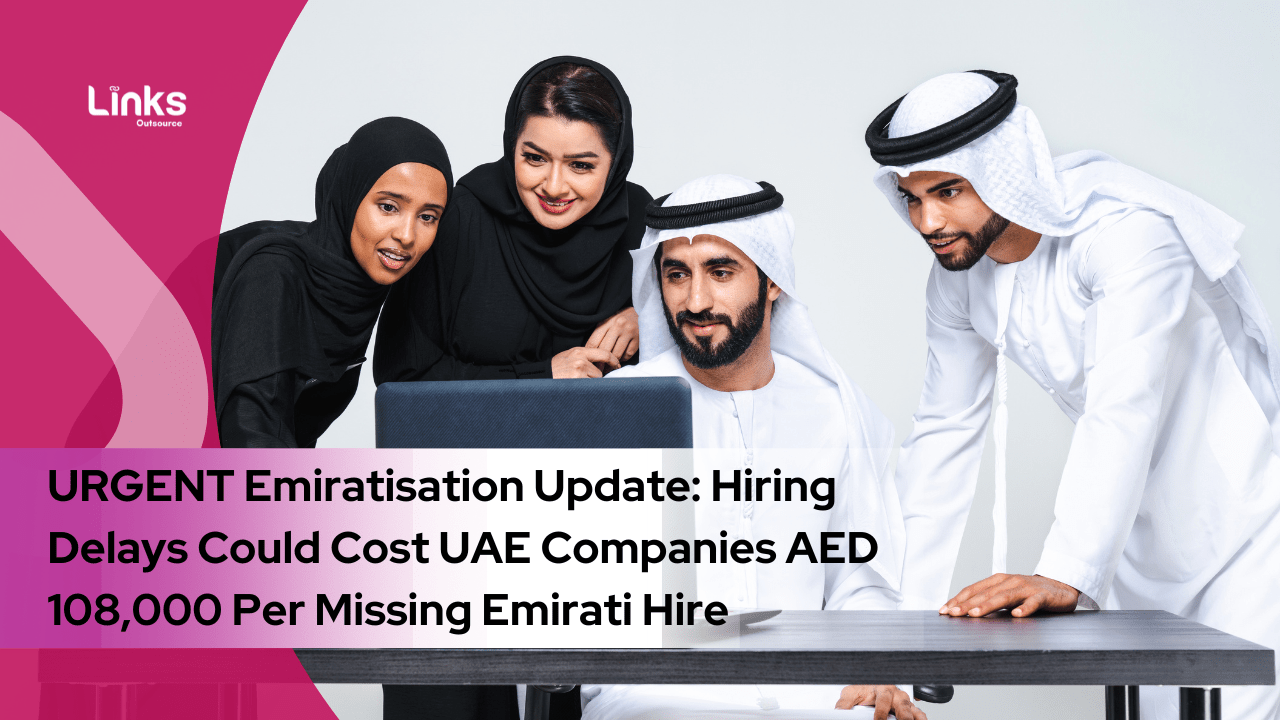
The UAE government is intensifying Emiratisation enforcement across the private sector, and companies that delay hiring UAE nationals could now face significant financial consequences. Businesses that fail to meet Emiratisation quotas risk penalties starting from AED 108,000 per missing Emirati hire annually, alongside labour restrictions and operational challenges.
As regulations tighten in 2026, employers are under increasing pressure to act quickly, build compliant workforce strategies, and accelerate Emirati recruitment efforts. For many companies, delaying action is no longer an option.
This urgent update outlines what employers need to know now, the risks of non-compliance, and how businesses can avoid costly penalties through strategic recruitment and HR outsourcing solutions.
What Is the Latest Emiratisation Requirement?
Under the UAE’s Emiratisation policy, private-sector companies with 50 or more employees are required to increase the percentage of Emirati employees within their workforce.
Current requirements include:
• Increase Emirati workforce by 1% every six months
• Meet annual nationalisation targets established by MoHRE
• Register and report Emirati hires through NAFIS
• Ensure proper payroll, GPSSA, and contract compliance
The government continues expanding nationalisation efforts across multiple industries to strengthen local workforce participation.
Why Businesses Are Facing Increased Pressure in 2026
The UAE is aggressively advancing workforce nationalisation to support:
• Economic sustainability
• Long-term workforce development
• Reduced dependency on overseas labour
• Growth of local talent pipelines
As a result, authorities are increasing:
- Compliance inspections
- Workforce audits
- Payroll monitoring
- Penalties for delays or non-compliance
Businesses that fail to adapt quickly may face severe financial and operational consequences.
The Real Cost of Delayed Emirati Hiring
Many companies underestimate the financial impact of hiring delays.
Potential consequences include:
1. AED 108,000 Fine Per Missing Emirati
The government imposes penalties annually for each required Emirati position not filled.
2. Labour and Visa Restrictions
Non-compliant businesses may face:
• Delays in work permit approvals
• Restrictions on labour file services
• Slower visa processing
3. Company Classification Downgrades
Businesses may lose favourable MoHRE classifications, impacting operational flexibility.
4. Increased Government Scrutiny
Frequent audits and inspections may follow repeated non-compliance.
5. Reputational Damage
Failure to support national workforce initiatives may affect brand reputation and government relationships.
The financial and operational risks make proactive compliance essential.
Industries Most Affected by Emiratisation Enforcement
Several industries are experiencing increased focus from regulators.
High-priority sectors include:
• Banking and finance
• Insurance
• Retail and hospitality
• Real estate
• Technology and digital services
• Healthcare
• Telecommunications
Businesses operating in these sectors must remain especially proactive.
Why Many Companies Are Struggling to Meet Targets
Despite the urgency, many organizations still face challenges.
Common issues include:
1. Delayed Recruitment Processes
Slow approvals and outdated hiring methods reduce hiring speed.
2. Limited Access to Emirati Talent
Competition for skilled UAE nationals continues to rise.
3. Compliance Complexity
Businesses often struggle with:
• NAFIS registration
• GPSSA contributions
• Payroll alignment
• Proper contract structures
4. Lack of Internal HR Expertise
Many companies lack specialized Emiratisation knowledge.
Without structured systems, compliance becomes difficult to maintain.
How Businesses Can Avoid Emiratisation Penalties
1. Accelerate Emirati Hiring Immediately
Companies should begin hiring efforts before deadlines approach.
Best practices include:
• Partnering with Emirati recruitment specialists
• Building dedicated Emirati talent pipelines
• Simplifying interview and onboarding processes
• Offering competitive compensation packages
Faster hiring reduces compliance risks.
2. Use HR Outsourcing for Emiratisation Compliance
HR outsourcing providers help businesses manage the entire process efficiently.
Outsourcing support includes:
- Emirati recruitment and onboarding
- NAFIS registration and reporting
- Payroll and WPS management
- GPSSA administration
- Compliance monitoring
This reduces internal workload and improves accuracy.
3. Monitor Quotas and Workforce Data
Businesses should implement systems to track:
• Current Emiratisation percentages
• Upcoming deadlines
• Hiring progress
• Compliance reports
Real-time monitoring helps prevent missed targets.
4. Build Long-Term Emirati Development Programs
Retention matters as much as recruitment.
Effective retention strategies include:
a. Career growth opportunities
b. Leadership training
c. Mentorship programs
d. Structured onboarding
Long-term retention improves workforce stability and compliance sustainability.
Role of Recruitment Agencies in Fast Emirati Hiring
Specialized recruitment agencies simplify hiring through:
• Access to pre-screened Emirati candidates
• Faster shortlisting and onboarding
• Industry-specific hiring expertise
• Compliance-focused recruitment support
Businesses using professional recruitment solutions can significantly reduce hiring delays.
Technology’s Role in Emiratisation Compliance
Modern HR systems help businesses stay compliant more efficiently.
Key technologies include:
• AI-driven recruitment tools
• Applicant Tracking Systems (ATS)
• HR compliance software
• Payroll automation systems
• Workforce analytics dashboards
Automation improves visibility, speed, and compliance accuracy.
Why Proactive Compliance Is a Competitive Advantage
Forward-thinking companies are treating Emiratisation as more than a legal obligation.
Strategic advantages include:
• Stronger government relationships
• Better employer branding
• Improved workforce sustainability
• Enhanced operational stability
• Access to local market expertise
Businesses that act early position themselves for long-term success.
Final Thoughts
The UAE’s latest Emiratisation enforcement measures send a clear message: delaying Emirati hiring can no longer be treated as a low-priority issue. With penalties reaching AED 108,000 per missing Emirati hire, businesses must act immediately to strengthen recruitment, compliance, and workforce planning strategies.
By combining fast hiring processes, HR outsourcing support, compliance monitoring, and long-term Emirati workforce development, companies can avoid penalties while building stronger, future-ready organizations aligned with the UAE’s national vision.