Links outsource

Top Outsourcing Companies in Dubai to Streamline Your Business Operations

Top Outsourcing Companies in Dubai to Streamline Your Business Operations

In Dubai’s fast-moving business environment, companies are increasingly turning to outsourcing to reduce overhead, improve efficiency, and scale with agility. Whether it’s HR, payroll, IT support, or government PRO services, outsourcing empowers you to focus on your core business—while experts handle the rest. 🏆 Links Outsource – Full-Service HR & PRO Partner Links Outsource is a trusted UAE-based firm specializing in: Why they’re #1: ✅ Ideal for: Startups, SMEs, foreign investors, and large businesses seeking total operational support in the UAE. Staff Connect A leading HR and staffing provider, offering full support for: PROCESS – The Outsource Professionals Known for business workflow and admin outsourcing, they offer: BPO Accounting Services Experts in financial and tax outsourcing: CubeZix A technology-driven outsourcing firm: 📊 Rating: 4.4 ★ | Reviews: 79 Outsourced Payroll Solutions (OPS) Dubai-based payroll and HR compliance provider: Sundus Recruitment & Outsourcing Trusted for recruitment and RPO services: MD Global HR Consulting Quick, reliable HR outsourcing partner: 🔄 Other Notable Providers Final Takeaway Outsourcing in Dubai isn’t just about cost-cutting—it’s about unlocking speed, expertise, and compliance at scale. Whether you’re a startup or a multinational, partners like Links Outsource provide the local know-how and operational support to help you succeed in the UAE.

Hiring Emirati Talent in the UAE: 5 Proven Strategies That Actually Work

Hiring Emirati Talent in the UAE: 5 Proven Strategies That Actually Work

With the UAE’s continued push for Emiratization, hiring local talent isn’t just a government mandate—it’s a competitive advantage. Emiratis bring deep cultural insight, local market understanding, and long-term commitment to organizations. But attracting and retaining top Emirati professionals requires more than posting job ads. Here are 5 proven strategies to successfully recruit and retain Emirati talent in 2026, ensuring you’re compliant, credible, and competitive in the UAE workforce. 1. Align with the UAE’s Emiratization Vision—Genuinely The Ministry of Human Resources and Emiratisation (MOHRE) has made it clear: Emiratization is a national priority. Fines of AED 8,000/month (per unmet quota) now apply to non-compliant private sector companies with 50+ employees. What works: Pro tip: Go beyond compliance—position your brand as a contributor to UAE Vision 2031. This resonates deeply with both candidates and regulators. 2. Create Emirati-Focused Graduate & Internship Programs Many companies overlook fresh graduates. Yet, this is exactly where long-term talent pipelines can be built. Best practices include: Structure these programs around mentorship, cultural integration, and career progression—not just training sessions. 3. Offer Career Paths, Not Just Jobs Many Emirati jobseekers are looking for purpose-driven careers, not transactional employment. A job with no vision of growth is a dealbreaker. What works: Use case: Some of the UAE’s best-performing private banks retain their Emirati employees with formalized programs that promise managerial roles within 3–5 years. 4. Adapt Work Culture to Emirati Expectations Workplace flexibility, cultural alignment, and inclusivity are essential to retaining Emirati talent. Proven cultural adjustments include: Also, ensure Arabic-language documentation and internal communication options are available when needed. 5. Partner with Specialized Emiratization & Recruitment Firms Working with the right recruitment partner makes all the difference—especially those specialized in Emirati talent acquisition. What they offer: Pro tip: Don’t wait for Emiratis to apply. Actively head-hunt on LinkedIn, NAOS, and Nafis, or work with government-supported talent hubs. Bonus: Leverage Nafis Incentives Through the Nafis Program, the UAE government supports private companies hiring Emiratis via: Ensure you’re registered and eligible to claim these benefits, reducing your overall cost of hiring and retaining Emirati talent. Final Thoughts The demand for skilled Emirati professionals is growing—and so are the penalties for companies that fail to adapt. But compliance isn’t the only reason to hire UAE Nationals. Emiratis bring authenticity, trust, and long-term value to your business. By following these 5 proven strategies—internships, fast-tracked career development, culture alignment, and smart recruitment—you’ll not only meet Emiratization targets, but build a stronger, more future-ready organization.

How EOR and Recruitment Firms Can Help Meet UAE Nationals Quotas

The UAE continues to push forward with an ambitious workforce nationalization vision—one where Emiratis play a central role in private-sector growth. With the government increasing the UAE nationals employment quota and intensifying inspections, companies must now take a proactive and strategic approach to hiring and retaining Emirati talent. However, meeting Emiratisation quotas isn’t always straightforward. Many businesses struggle with specialized talent shortages, compliance requirements, short timelines, and resource limitations. This is where Employer of Record (EOR) providers and recruitment firms step in—offering streamlined, compliant, and cost-effective solutions to help organizations easily meet their Emiratisation targets without operational disruption. Understanding the UAE Nationals Employment Quota Under the UAE’s Emiratisation framework, private companies must hire a specific percentage of Emiratis annually. The most recent mandates include: This makes it crucial for businesses to adopt UAE workforce nationalization strategies that are efficient, compliant, and sustainable. How EOR Providers Support Emiratisation Compliance An Employer of Record (EOR) allows companies to hire UAE nationals quickly—without setting up additional HR infrastructure or dealing with complex administrative requirements. Here’s how EOR solutions simplify Emirati hiring: 1. Fast & Compliant Emirati Hiring EOR firms manage everything required for a compliant Emirati hire: This removes the operational burden from the employer while ensuring every step aligns with UAE labour laws. 2. Reducing Risks of Non-Compliance Many companies unintentionally violate Emiratisation rules due to: An EOR eliminates these risks through strict, up-to-date compliance monitoring. 3. Supporting Rapid Scaling for Nationalisation When the government announces new inspection rounds or quota increments, companies often need to hire Emiratis quickly. An EOR makes it possible to onboard Emirati employees within days, not months—without adding internal HR overhead. This allows organizations to stay compliant even during sudden quota changes. How Recruitment Firms Help You Acquire the Right Emirati Talent While an EOR manages hiring and compliance, recruitment agencies ensure you find the right Emirati talent for the right role. Outsourcing recruitment for Emiratis offers distinct advantages: 1. Access to a Wide Emirati Talent Pool Reputable recruitment firms maintain extensive databases of UAE nationals from diverse sectors, including: This allows companies to source qualified Emirati talent faster. 2. Targeted Search & Specialized Emirati Hiring Specialist recruiters understand the nuances of Emirati talent acquisition, including: This helps organizations build sustainable national workforce strategies—not just hire to meet a quota. 3. Reducing Hiring Costs & Time-to-Fill Instead of spending months searching for the right Emirati candidates, recruitment firms: This drastically shortens hiring timelines and reduces cost per hire. Combining EOR + Recruitment = The Ultimate Strategy for Emiratisation Success Businesses that want maximum compliance and minimal hassle often combine both services: Recruitment Agency: finds and pre-qualifies top Emirati candidatesEOR Provider: handles contracts, payroll, visas, benefits & compliance This hybrid approach ensures: For companies with high quotas or multiple open roles for UAE nationals, this is the most effective solution. Top HR Solutions for Emiratisation That Businesses Should Use To fully meet and sustain the UAE nationals employment quota, companies should adopt these HR tools: Emiratisation Workforce Planning Identify quota gaps, allocate job roles, and forecast future hiring needs. Emirati Talent Mapping Understanding the depth, skills, and availability of national talent in the market. Emirati Compensation Benchmarking Creating salary structures that match Emirati expectations and industry standards. NAFIS Programme Support Ensuring company eligibility, salary support registration, and reporting. End-to-End Payroll & GPSSA Administration Managing contributions, deductions, and entitlements. Continuous Emiratisation Compliance Audits Avoiding fines through preventive monitoring. Why Outsourcing Emiratisation to Specialists Is the Smartest Move Companies outsource Emiratisation because: Instead of struggling through documentation, reporting, pension rules, and ongoing audits, outsourcing allows businesses to remain fully compliant and future-ready. Final Thoughts Meeting the UAE nationals employment quota isn’t simply about filling positions—it’s about strategically integrating Emiratis into the private sector while maintaining productivity and compliance. By combining the strengths of EOR providers and recruitment firms, businesses can achieve seamless Emiratisation, reduce hiring pressure, and ensure long-term organizational success. With the right UAE workforce nationalization strategies, companies not only avoid penalties but also contribute meaningfully to the nation’s economic vision.

Outsourcing & Emiratisation: How LINKS Outsource Strategically Helps UAE Companies Stay Compliant

Emiratisation remains one of the UAE’s most important national priorities. The government is actively reshaping the private-sector workforce by encouraging companies to hire, train, and retain UAE nationals across all major industries. As annual quotas rise and compliance inspections intensify, businesses must stay fully aligned with legal requirements or face large penalties, operational delays, and restrictions on future hiring. For many companies, navigating Emiratisation demands can be overwhelming—especially when they lack internal HR resources, local legal knowledge, or access to qualified Emirati talent. This is where LINKS Outsource offers a major advantage. With deep expertise in HR outsourcing in the UAE, compliance frameworks, and nationalisation strategies, LINKS enables businesses to meet all Emiratisation requirements efficiently and without interruption. Understanding Emiratisation Requirements for UAE Companies Private-sector employers must follow several mandatory rules that govern Emiratisation. These include: • Companies with 50 or more employees must increase their UAE national workforce by 1% every six months• Priority sectors have higher annual nationalisation targets set by MoHRE• Job roles requiring Emirati placement are increasing under new workforce directives• Companies must register, track, and report Emirati hires through official government portals, including NAFIS and MoHRE systems• Salary levels, job titles, and contract structures for Emiratis must comply with strict guidelines• Failure to meet quotas results in financial penalties and restrictions on work permits Keeping up with these requirements can be challenging, especially for organizations with expanding teams or complex HR structures. LINKS Outsource steps in as a strategic partner to simplify compliance and reduce legal and operational risks. How Outsourcing Helps Emiratisation Compliance HR outsourcing in the UAE has become one of the most effective ways to manage Emiratisation requirements. LINKS Outsource provides professional, scalable support that allows companies to fulfill their nationalisation targets without overburdening internal HR teams. Here are the core ways outsourcing enhances Emiratisation compliance: 1. Complete Administrative Support for Emirati Hiring Emirati recruitment involves precise documentation, legally compliant job offers, NAFIS enrollment, pension registrations, and contract structuring. LINKS Outsource handles all of these steps, ensuring every requirement is met without mistakes. This reduces administrative pressure and keeps the hiring process smooth and compliant. 2. Monitoring Quotas and Tracking Progress Many companies fail to meet Emiratisation targets simply because they lose track of timelines or quota changes. LINKS provides continuous monitoring of quota obligations, upcoming deadlines, and compliance statuses. This proactive approach prevents costly penalties and ensures businesses are always ahead of the curve. 3. Ensuring Accurate Payroll and GPSSA Management One of the biggest compliance challenges is managing payroll for Emiratis, especially contributions to the General Pension and Social Security Authority (GPSSA). LINKS Outsource ensures timely pension registration, payroll accuracy, and correct employer/employee contribution processing. This prevents violations that could trigger fines or disputes. 4. Aligning HR Policies with UAE Labour Law LINKS reviews and updates internal HR policies so they match Emiratisation rules, UAE labour law, and new MoHRE directives. This includes probation periods, salary structures, leave entitlements, and training support for Emirati employees. A legally aligned HR system significantly reduces risks during audits or inspections. 5. Access to Qualified Emirati Talent A major challenge for many businesses is finding skilled UAE nationals interested in private-sector roles. Through outsourcing support, LINKS provides access to verified Emirati candidates, talent networks, and sector-specific recruitment guidance. This streamlines the hiring process and helps companies meet their quotas faster. How Can Outsourcing Help With Emiratisation Targets? Many companies wonder whether outsourcing can meaningfully help achieve Emiratisation targets. The answer is yes—because outsourcing modernizes the entire compliance workflow and removes obstacles that slow down nationalisation efforts. Here’s how outsourcing directly helps companies hit their targets: Faster Hiring and Onboarding Instead of spending months recruiting, screening, and finalizing contracts, LINKS accelerates the hiring cycle with ready pipelines of Emirati talent and automated onboarding processes. Reduced Internal HR Burden Rather than assigning multiple HR staff to manage compliance, companies can rely on dedicated specialists who handle every detail. Real-Time Compliance Updates UAE labour rules evolve frequently. LINKS ensures companies are instantly updated and compliant with new requirements, avoiding last-minute issues. Zero Administrative Errors Mistakes in contracts, NAFIS registration, or pension processing can harm compliance. Outsourcing eliminates these risks through expert oversight. Higher Retention of Emirati Talent LINKS designs structured onboarding, training, and HR support for Emiratis, improving long-term retention and employee satisfaction. Peace of Mind for Leadership Managers can focus on business operations while outsourcing teams manage compliance deadlines, reporting, and documentation. Why LINKS Outsource Is the Ideal Partner for Emiratisation Compliance LINKS Outsource stands out because of its local expertise, advanced HR systems, and deep understanding of nationalisation policies. The company offers end-to-end solutions tailored to real business needs, including: • Emirati recruitment and screening• NAFIS guidance and eligibility support• GPSSA registration and payroll management• Emiratisation audits and compliance checks• Job role creation based on quota requirements• Continuous monitoring of Emiratisation progress• Documentation preparation for MoHRE inspections• HR policy alignment with nationalisation rules This comprehensive support ensures that companies stay compliant, avoid penalties, and build sustainable Emirati workforces. Final Thoughts Emiratisation is transforming the UAE’s private sector, but meeting these requirements can be complicated and time-consuming for businesses. Outsourcing through LINKS Outsource offers a practical, reliable, and legally sound way to stay compliant with all nationalisation rules. From managing complex HR processes to supporting Emirati hiring and payroll, LINKS acts as a trusted partner that strengthens compliance and protects companies from avoidable risks. By embracing HR outsourcing in the UAE, companies can meet their Emiratisation targets efficiently, reduce internal burdens, and contribute to the long-term growth of the nation’s workforce. FAQs 1. What are the main Emiratisation requirements for UAE companies? Companies with 50 or more employees must increase their Emirati workforce by 1% every six months. Certain sectors have higher nationalisation targets, and employers must register hires through MoHRE and NAFIS while ensuring salaries, job titles, and contracts meet legal guidelines. 2. How does HR outsourcing in the UAE support Emiratisation compliance? HR outsourcing providers like LINKS Outsource manage contract preparation, NAFIS registration, … Read more


UAE Crackdown on Bogus Emiratization : 824 Fake Jobs, 565 Firms

UAE’s Crackdown on Bogus Emiratization 824 Fake Jobs, 565 Firms

The UAE has issued a clear and powerful message to private sector employers: Emiratization quotas are not optional and certainly not for manipulation. In a high-impact enforcement campaign UAE Crackdown on Bogus Emiratization, the Ministry of Human Resources and Emiratisation (MoHRE) discovered that 565 companies had collectively created 824 fake Emirati jobs, attempting to appear compliant without offering genuine employment opportunities. This crackdown marks one of the strongest actions yet under the country’s national Emiratization strategy and serves as a wake-up call for all businesses operating in the UAE. UAE Crackdown on Bogus Emiratization, What Happened? Between mid-2022 and early 2024, MoHRE conducted digital audits, cross-checked workforce data, and performed on-ground inspections. The result: hundreds of businesses were exposed for fraudulently listing Emiratis as employees—while in reality, these individuals held no active role, no assigned duties, and no day-to-day involvement in the company. These false hires were made primarily to: The Consequences Were Immediate MoHRE did not hold back. Offending companies faced: These penalties go beyond financial loss they directly disrupt business operations and long-term credibility in the market. Why Emiratization Is Not Just a Number The Emiratization program was launched to ensure meaningful employment opportunities for UAE nationals in the private sector. The vision is long-term, aiming to diversify the national workforce and reduce dependence on expatriate labor. For mainland companies with 50 or more employees, the law mandates: Creating fake jobs undermines this mission and now, more than ever, comes with legal and reputational risk. What Can Businesses Learn From This? 1. Genuine Roles Only Every Emirati employee must have a valid contract, real responsibilities, and documented proof of employment—such as attendance logs and payroll history. 2. Proper Use of Nafis Nafis incentives—like salary support and upskilling funds—are designed to build careers, not to manipulate quotas. Misuse can lead to blacklisting. 3. Stay Ahead of Inspections MoHRE is deploying AI, payroll audits, and visa tracking to identify violations. Don’t wait for a notice—conduct internal checks regularly. 4. Avoid “Token Hires” Simply giving an Emirati employee a title without involving them in meaningful work will be flagged. Ensure job roles are productive, supervised, and performance-based. Smart Compliance Strategies Action Point What to Do Recruit Authentically Assign Emiratis to real roles with defined job descriptions Document Everything Keep employment contracts, attendance logs, and performance reviews updated Audit Nafis Usage Match every subsidy to a real hire with proper documentation Seek Expert Guidance Work with Emiratization compliance consultants or legal advisors The Opportunity in Doing It Right Complying with Emiratization isn’t just about avoiding fines it opens doors. Businesses that embrace the policy will benefit from: Final Word: Don’t Be Next The exposure of 565 companies and 824 fake roles proves that the UAE is actively monitoring and taking strict action against non-compliance. Companies that engage in superficial hiring practices not only risk fines but also damage their long-term business potential. To future-proof your business in the UAE, treat Emiratization as a strategic initiative, not just a regulatory obligation.

The Countdown Begins: Why June 30 Is a Key Date for Emiratization Compliance

The Countdown Begins Why June 30 Is a Key Date for Emiratization Compliance

As the UAE accelerates its drive toward workforce nationalization, a significant deadline looms for private sector companies: June 30, 2025. This date marks the first major checkpoint for businesses to meet their Emiratization compliance obligations. The initiative, led by the UAE Ministry of Human Resources and Emiratisation (MoHRE), aims to integrate more Emirati talent into the private sector and reduce dependence on foreign labor. If your business is operating in the UAE, understanding the importance of this deadline and the steps to comply is critical to avoid fines and safeguard your company’s reputation. What Is Emiratization and Why Is It Important? Emiratization is a long-term government program designed to increase the representation of Emirati nationals in the UAE’s private workforce. The program addresses the balance between expatriate labor and local employment by offering incentives and setting mandatory hiring quotas for companies. The strategy directly supports the UAE’s economic diversification plan and provides long-term sustainability by building local skills across key industries. Who Must Meet Emiratization Compliance by June 30, 2025? According to MoHRE, two categories of businesses must comply: 1. Companies with 50 or More Employees 2. Companies with 20 to 49 Employees The compliance requirements focus on companies in strategic sectors such as IT, finance, education, healthcare, insurance, real estate, professional services, and entertainment. What Happens If You Fail to Comply? Failure to meet the June 30, 2025, Emiratization targets results in heavy financial penalties: Additional consequences include being blocked from government services, delays in work permit processing, and disqualification from public contracts. How Can Companies Achieve Emiratization Compliance? The UAE government has provided several support mechanisms to help companies meet their quotas: 1. Utilize the Nafis Program The Nafis platform offers companies direct access to qualified Emirati candidates. It also provides salary subsidies, training, and recruitment assistance to help employers meet their obligations. 2. Conduct Workforce Planning Businesses should review their current workforce and identify positions suitable for UAE nationals. Building a structured recruitment and training plan ensures smoother compliance. 3. Offer Training and Development Training programs tailored to upskill Emirati hires can help integrate them into the organization and retain them in the long run. 4. Partner with Experts Working with HR consultants or legal advisors who specialize in Emiratization compliance can help your business avoid costly mistakes. 5. Monitor Progress Regularly Companies should keep detailed records of their Emirati workforce ratios and track progress toward meeting their targets well ahead of the deadline. Why the June 30 Deadline Matters for Emiratization Compliance The June 30 Emiratization deadline is not just a regulatory checkpoint it is an opportunity for businesses to align with the UAE’s national vision and demonstrate their commitment to local workforce development. Early compliance not only avoids penalties but also improves employer branding, strengthens relationships with regulators, and positions the company as a preferred partner in both the private and government sectors. Conclusion The UAE government has made it clear: companies operating in the UAE must treat Emiratization compliance as a business priority. With the first phase deadline fast approaching on June 30, 2025, it is essential for companies to act now. By leveraging platforms like Nafis, developing local talent, and staying informed about changing regulations, businesses can achieve smooth and timely compliance. The benefits go beyond avoiding penalties—they include contributing to the nation’s long-term economic stability and gaining access to lucrative government projects.

The Challenges of Hiring Emiratis and How to Overcome

The Challenges of Hiring Emiratis and How to Overcome

As the United Arab Emirates (UAE) continues to establish itself as a global economic powerhouse, the importance of hiring local talent has never been more pronounced. The Emiratization initiative drives businesses to invest in Emirati professionals, aiming to develop a workforce that reflects the nation’s demographics. However, hiring Emiratis comes with its share of challenges. This blog discusses these challenges and offers practical solutions to overcome them, highlighting how partnering with Links Outsource can facilitate the hiring process. Understanding Emiratization Emiratization is a government-led initiative designed to ensure that Emiratis are fairly represented in the workforce, particularly in the private sector. This movement is crucial for economic diversification, reducing dependency on foreign labor, and promoting sustainable growth. However, companies often find it challenging to integrate Emiratis into their workforce. Common Challenges in Hiring Emiratis One of the primary challenges is the skills gap between the qualifications held by Emiratis and the requirements of the job market. The traditional education system may not always align with the demands of various industries, leading to a disconnect between what employers need and what potential candidates can offer. The UAE job market is highly competitive. Many expatriates seek opportunities in the UAE, which often leads to a preference for hiring foreign talent with certain skill sets and experience levels. This creates an environment where Emiratis may struggle to secure positions despite their potential. Cultural perceptions can also influence hiring practices. Some employers may hold preconceived notions about Emiratis’ work ethics or capabilities, which can lead to biases in recruitment. This can deter them from considering Emiratis for positions, regardless of their actual qualifications. Internship programs and on-the-job training opportunities are crucial for nurturing local talent. However, many organizations do not offer these avenues, which results in Emiratis lacking the practical experience needed to enter the workforce confidently. Navigating the regulatory landscape related to employment in the UAE can be complex, especially for businesses unfamiliar with Emiratization policies. Companies might hesitate to hire Emiratis due to a lack of understanding of their rights and the benefits of providing training and development opportunities. Even after successfully hiring Emiratis, retaining them can be a challenge. Many Emiratis seek career growth and professional development opportunities, and if organizations do not provide pathways for advancement, they may lose valuable talent. Strategies to Overcome Hiring Challenges Building partnerships with universities and vocational training institutions can help employers understand the educational qualifications of Emiratis. Collaborating on curriculum development can also ensure that training programs align with industry needs. Offering internships or co-op programs will provide Emiratis with valuable hands-on experience while allowing companies to gauge their potential. Creating targeted recruitment programs specifically for Emiratis can help organizations attract local talent. This can include hosting job fairs, engaging with local communities, or offering pipeline programs that cater to young Emirati graduates. Tailoring recruitment strategies will not only increase the number of applicants but also enhance the quality of candidates. Emphasizing inclusivity within the workplace can help dispel negative stereotypes and create a conducive environment for Emiratis to thrive. Organizations should develop diversity and inclusion training programs to educate employees about cultural sensitivities and biases. Encouraging collaboration among Emiratis and expatriates can foster understanding and strengthen workplace dynamics. Establishing robust training and development programs is vital for addressing the skills gap. Companies should invest in continuous professional development initiatives to help Emiratis grow their skill sets and gain the necessary qualifications for career advancement. Mentorship programs that pair Emirati employees with experienced professionals can further bridge the gap between education and practical experience. To attract Emirati talent, organizations should streamline their recruitment processes. Simplifying application procedures and ensuring responsiveness during recruitment can create a positive candidate experience. Transparent communication about job expectations and career advancement opportunities will also encourage Emiratis to apply. Organizations need to comprehend the nuances of Emiratization regulations. By ensuring compliance with local laws, companies can mitigate risks while benefiting from government incentives designed to encourage the hiring of Emiratis. Working with an HR consultant who specializes in Emiratization can provide valuable insights, ensuring organizations align their hiring practices with regulatory requirements. Engage with Links Outsource Outsourcing human resources functions can be a game-changer for companies looking to hire Emiratis. Partnering with outsourcing services brings numerous advantages, including: Conclusion Hiring Emiratis presents significant opportunities and challenges for multinational companies operating in the UAE. While the Emiratization initiative aims to create a balanced workforce that reflects the local population, companies must recognize and address the hurdles that come with this goal. By implementing targeted strategies, such as collaborating with educational institutions, creating inclusive company cultures, and simplifying recruitment processes, companies can enhance their efforts to hire Emirati talent. Furthermore, partnering with Links outsource HR services provides the expertise and resources necessary to navigate the complexities of local regulations and recruitment practices effectively. The successful integration of Emiratis into the workforce not only contributes to the UAE’s long-term economic diversification but also enriches organizational culture and fosters a sense of community. As businesses strive for success in this vibrant market, prioritizing Emirati talent and addressing the challenges of hiring will be key to building a sustainable, diverse, and competitive workforce.

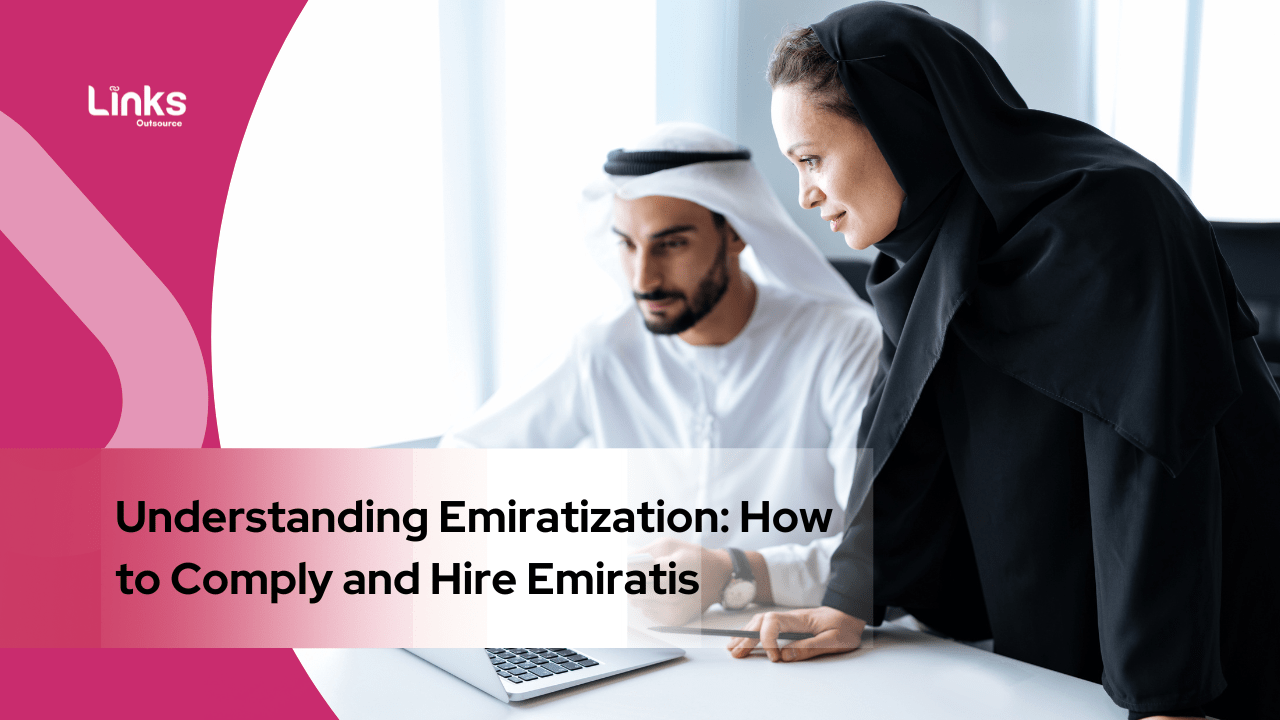
Understanding Emiratization: How to Comply and Hire Emiratis

Understanding Emiratization How to Comply and Hire Emiratis

Emiratization is a strategic initiative by the United Arab Emirates (UAE) government aimed at increasing the participation of Emirati nationals in the private sector workforce. As part of the UAE’s Vision 2030, this policy seeks to reduce reliance on expatriate labor, empower local talent, and foster sustainable economic growth. For businesses operating in the UAE, understanding emiratization and complying with Emiratization requirements is not only a legal obligation but also an opportunity to contribute to national development while building a diverse and skilled workforce. In this article, we’ll explore what Emiratization entails, its objectives, compliance requirements, and practical strategies for hiring and retaining Emirati talent effectively. Understanding Emiratization? Emiratization refers to the UAE government’s efforts to integrate Emirati citizens into key roles within the private sector. Historically, the private sector has been dominated by expatriates, with Emiratis primarily employed in government positions. To address this imbalance, the UAE introduced Emiratization policies to encourage private companies to hire and develop local talent. The program focuses on sectors such as banking, finance, telecommunications, energy, and retail, where Emirati representation is particularly encouraged. It also emphasizes leadership and managerial roles, ensuring that Emiratis are equipped with the skills needed to drive innovation and growth. Objectives of Emiratization Legal Framework and Compliance Requirements To ensure compliance with Emiratization, the UAE government has established clear guidelines and quotas for private sector companies. Here’s an overview of the key requirements: 1. Quota System 2. Tawteen Program 3. Penalties for Non-Compliance 4. Reporting Obligations 5. Nafis Program How to Hire Emiratis Effectively While compliance with Emiratization is mandatory, hiring Emiratis should be viewed as an opportunity to strengthen your organization. Here are practical steps to attract, onboard, and retain Emirati talent: 1. Understand the Skills and Preferences of Emiratis 2. Partner with Government Programs 3. Offer Competitive Compensation Packages 4. Provide Training and Mentorship 5. Create an Inclusive Work Environment 6. Highlight Career Advancement Opportunities 7. Leverage Technology for Recruitment Challenges in Hiring Emiratis While Emiratization offers numerous benefits, businesses may encounter challenges during implementation. Here are some common hurdles and solutions: 1. Limited Pool of Candidates 2. Cultural Misalignment 3. Retention Issues 4. Cost of Implementation Benefits of Emiratization for Businesses Complying with Emiratization not only fulfills legal obligations but also provides several advantages for businesses: Conclusion Emiratization is more than just a regulatory requirement, it’s a commitment to shaping the future of the UAE. By embracing this initiative, businesses can play a pivotal role in empowering Emirati talent, driving economic diversification, and contributing to national prosperity. To succeed in Emiratization, companies must adopt a proactive approach, combining compliance with genuine efforts to attract, develop, and retain Emirati employees. By doing so, they not only fulfill their legal obligations but also position themselves as leaders in creating a sustainable and inclusive workforce. As the UAE continues to evolve as a global hub for business and innovation, Emiratization represents a shared journey toward progress and success. By investing in Emirati talent today, businesses can build a brighter tomorrow for themselves and the nation.