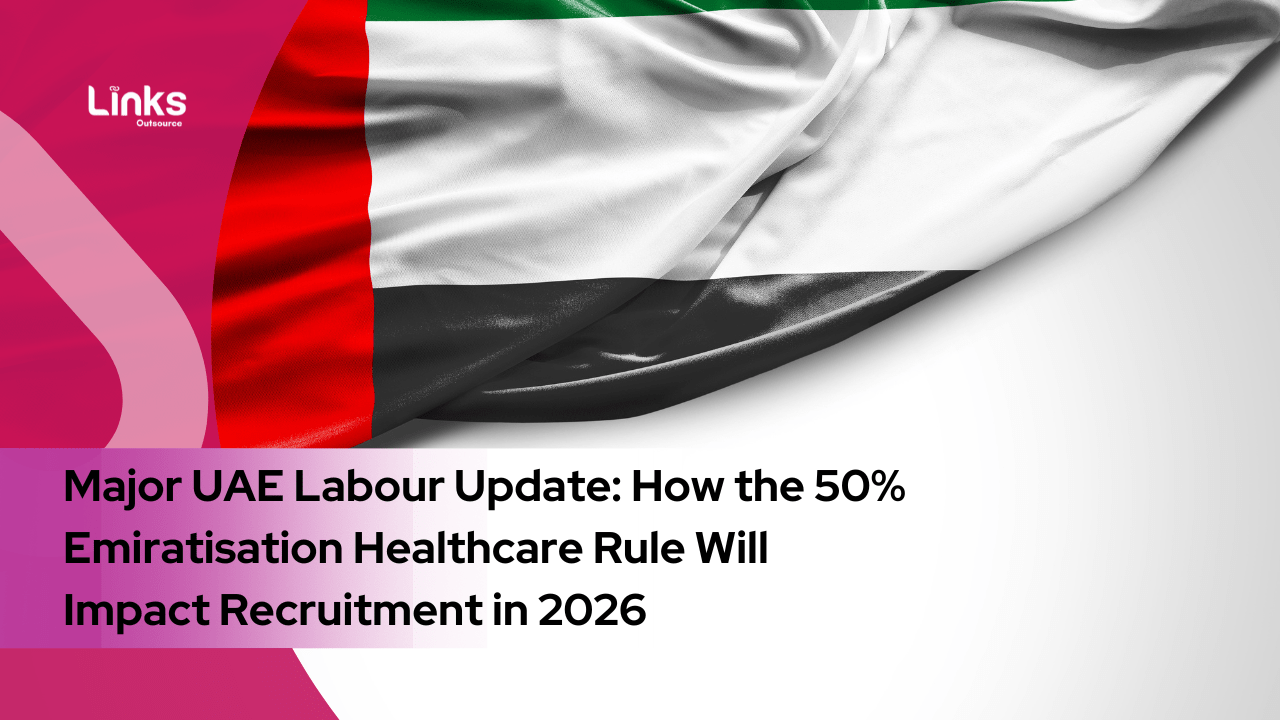
Major UAE Labour Update: How the 50% Emiratisation Healthcare Rule Will Impact Recruitment in 2026
The UAE continues to strengthen its Emiratisation agenda with new sector-specific workforce requirements, and one of the most significant developments is the expansion of Emiratisation targets within the healthcare industry. As the government accelerates efforts to increase the participation of UAE nationals in critical sectors, healthcare providers must prepare for stricter recruitment and workforce planning requirements. For hospitals, clinics, medical centres, pharmaceutical companies, and healthcare support organisations, the updated Emiratisation framework represents both a compliance obligation and an opportunity to build a stronger, more sustainable workforce. Businesses that prepare early will be better positioned to meet regulatory expectations while attracting and retaining qualified Emirati healthcare professionals. Understanding the New Healthcare Emiratisation Rule The UAE government has introduced enhanced Emiratisation initiatives aimed at increasing the participation of Emirati professionals in the healthcare sector. The objective is to: • Develop local healthcare talent• Reduce dependence on overseas recruitment• Strengthen healthcare sustainability• Support the UAE’s long-term healthcare strategy• Improve career opportunities for UAE nationals Healthcare organisations should review the latest Ministry of Human Resources and Emiratisation (MoHRE) requirements and guidance issued by the relevant health authorities to ensure ongoing compliance. What Healthcare Employers Need to Know Healthcare organisations should prepare for: • Increased Emirati hiring expectations• Stronger compliance monitoring• Greater workforce reporting obligations• Long-term national workforce planning• Increased focus on Emirati career development The earlier organisations adapt, the easier compliance becomes. Why This Update Matters for Healthcare Recruitment The healthcare sector has traditionally relied heavily on expatriate professionals. However, changing workforce priorities now require employers to build stronger local talent pipelines. Key Recruitment Challenges Include • Limited availability of experienced Emirati healthcare professionals in some specialisations• Growing competition among employers• Longer recruitment timelines• Increased compliance requirements• Workforce planning complexities Healthcare organisations that continue relying solely on traditional recruitment methods may struggle to achieve future targets. How the 50% Emiratisation Rule Could Change Recruitment Strategies 1. Greater Demand for Emirati Healthcare Professionals Healthcare employers are expected to compete more actively for Emirati talent. High-demand positions may include: • Healthcare administrators• Medical laboratory professionals• Pharmacists• Nursing professionals• Allied healthcare specialists• Healthcare operations professionals Demand for qualified UAE nationals is expected to increase significantly. 2. Increased Focus on Graduate Recruitment Many organisations are expected to invest more heavily in graduate development programmes. Recruitment initiatives may include: • Internship programmes• Graduate trainee programmes• University partnerships• Clinical placement opportunities• Professional mentoring Developing talent early creates long-term workforce sustainability. 3. Greater Investment in Employee Development Hiring alone will not be enough. Healthcare organisations will also need to focus on: • Professional development• Leadership programmes• Clinical skills enhancement• Career progression planning• Employee retention strategies Retention will become just as important as recruitment. Challenges Healthcare Employers May Face Many organisations may experience implementation challenges during the transition. Common Challenges Include 1. Talent Shortages Competition for experienced Emirati healthcare professionals is increasing. 2. Recruitment Costs Higher demand may increase recruitment investment and salary expectations. 3. Workforce Planning Organisations must balance operational requirements while meeting Emiratisation objectives. 4. Compliance Management Employers must monitor recruitment progress, documentation, reporting, and workforce data accurately. Strategic planning will be essential. How Healthcare Organisations Can Prepare 1. Review Workforce Requirements Conduct a detailed workforce assessment to understand: • Current Emirati workforce numbers• Future hiring requirements• Critical workforce gaps• Department-specific recruitment needs Planning early reduces compliance risks. 2. Strengthen Recruitment Partnerships Working with specialist recruitment firms provides access to: • Pre-screened Emirati candidates• Healthcare recruitment expertise• Faster hiring processes• Market intelligence Specialist support helps organisations recruit more efficiently. 3. Invest in Employer Branding Healthcare professionals increasingly evaluate employers before accepting opportunities. Focus areas include: • Career growth opportunities• Professional development• Modern workplace culture• Competitive benefits• Employee wellbeing initiatives A strong employer brand attracts stronger candidates. 4. Develop Internal Talent Healthcare organisations should build long-term workforce capability through: • Clinical training programmes• Leadership development• Mentorship initiatives• Continuous education support Internal development improves retention and workforce stability. The Role of HR Outsourcing in Healthcare Emiratisation Many healthcare organisations are using HR outsourcing to simplify workforce compliance. HR Outsourcing Can Support • Emirati recruitment• Workforce planning• Payroll administration• Compliance monitoring• Employee onboarding• HR documentation• Recruitment reporting This allows healthcare providers to focus on delivering quality patient care while HR specialists manage workforce administration. Technology Is Supporting Smarter Recruitment Healthcare employers are increasingly adopting recruitment technology to improve hiring efficiency. Popular Solutions Include • Applicant Tracking Systems (ATS)• AI-powered recruitment software• Digital onboarding platforms• HR Management Systems (HRMS)• Workforce analytics dashboards Technology helps organisations recruit faster while improving compliance visibility. What Healthcare Employers Should Do Next Healthcare organisations should begin preparing now rather than waiting for future compliance deadlines. Recommended Action Plan Taking proactive action today will reduce future recruitment pressure. Final Thoughts The UAE’s healthcare sector is entering a new phase of workforce transformation. As Emiratisation requirements continue to evolve, healthcare organisations must move beyond reactive hiring and adopt long-term workforce planning strategies. Businesses that invest in Emirati recruitment, employee development, HR technology, and strategic workforce planning will not only achieve compliance but also build resilient healthcare teams capable of supporting the UAE’s long-term healthcare vision. Rather than viewing the new healthcare Emiratisation requirements as a challenge, forward-thinking organisations should recognise them as an opportunity to strengthen their workforce, improve sustainability, and contribute to the future of healthcare in the UAE.